What can I do when my child is angry?
Name it, move it, stay close.
That is what the grown-ups page in Book 1 says. With children, anger itself is rarely the problem. Holding it in is. In the story, anger is allowed to be there, finds a way out through the body (stomping, roaring, running), and then leaves on its own.
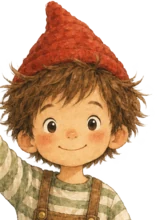
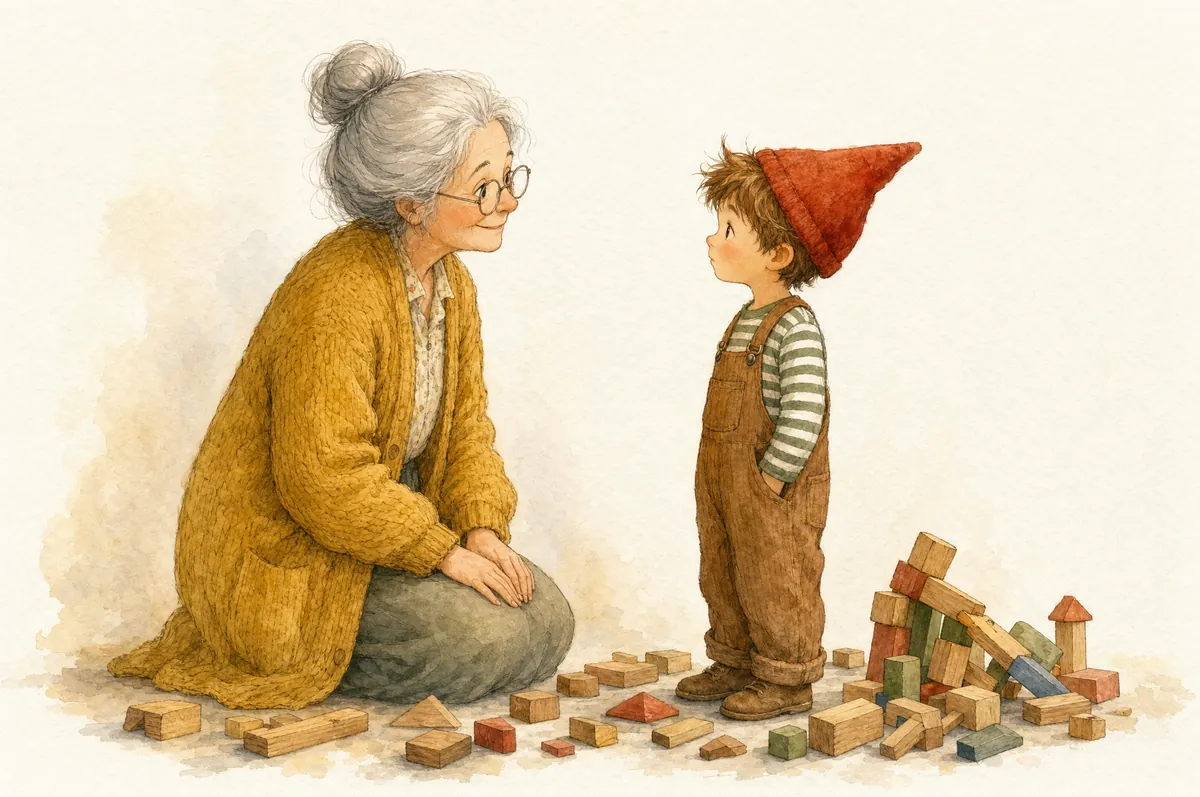
Grandma Alma shows how. She kneels down, looks at Mio for a long time, and says who has come to visit. Then the two of them stomp in the mud together.
Why are feelings visitors in these books?
Because a visitor comes and goes again.
The stories never say that Mio is angry or sad. Someone knocks at the little red door, someone comes in, and later he leaves again. That way you can talk about a feeling as someone who happens to be here right now.
What do I say after reading?
Ask who came to visit today.
Grandma Alma says what she sees and asks, instead of lecturing. A few questions to try:
- Who knocked at your door today?
- What did your visitor look like? Big or small?
- What did he want?
- Is he gone now?
And what if sadness comes after the anger?
Then it needs company, not fixing.
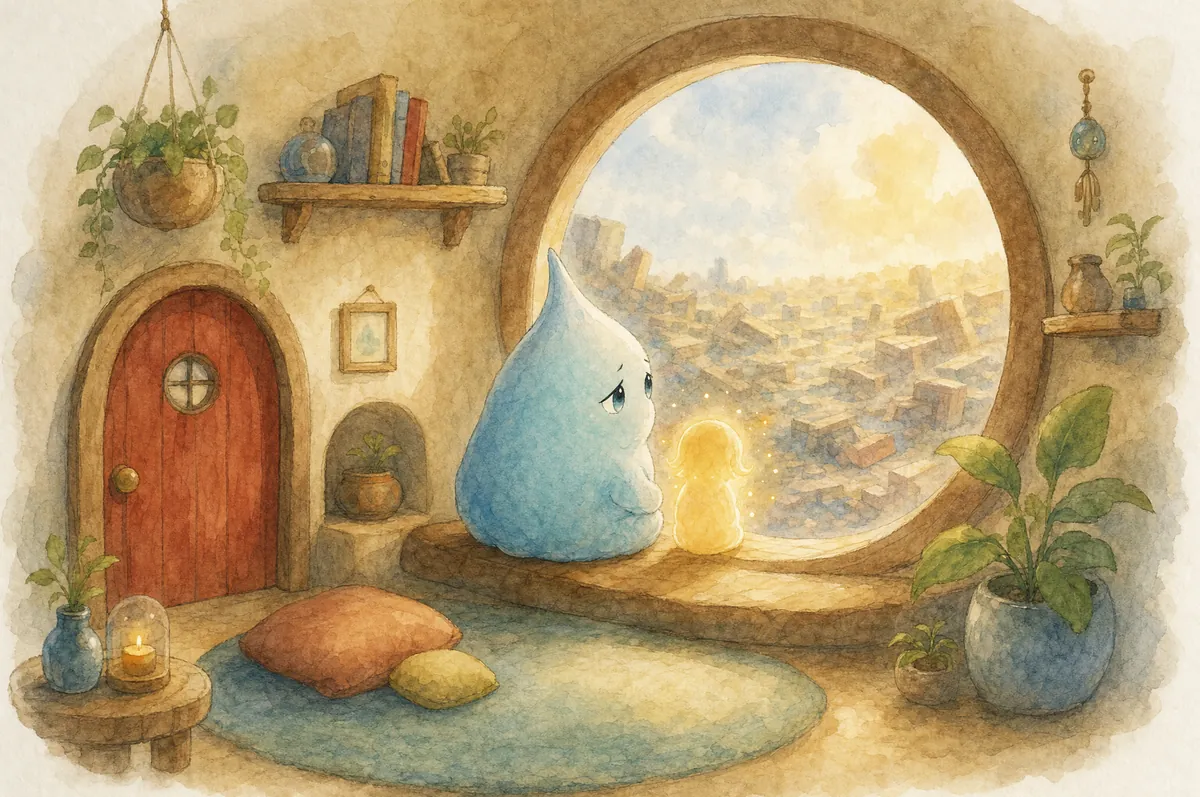
In Book 1, Puddle comes to visit after Rumble. Grandma Alma says, “He's sad about your tower. And he's allowed to be.” Puddle and Pip sit by the round window together. Sometimes that's all you need.
Where do lines like “Big boys don't get angry” come from?
In the books, Koko the parrot says them.
Koko repeats what the grown-ups said, always at the wrong moment. Sentences like that belong to Koko's parrot voice. They never come from the child.
How do I read the books aloud?
Slowly, and with an eye on both pictures.
Every page has two pictures: on top, what happens outside; below, what is going on in Mio's inner room at the same time. Each picture comes with one to three short sentences. Let your child point out what they discover in the bottom picture.